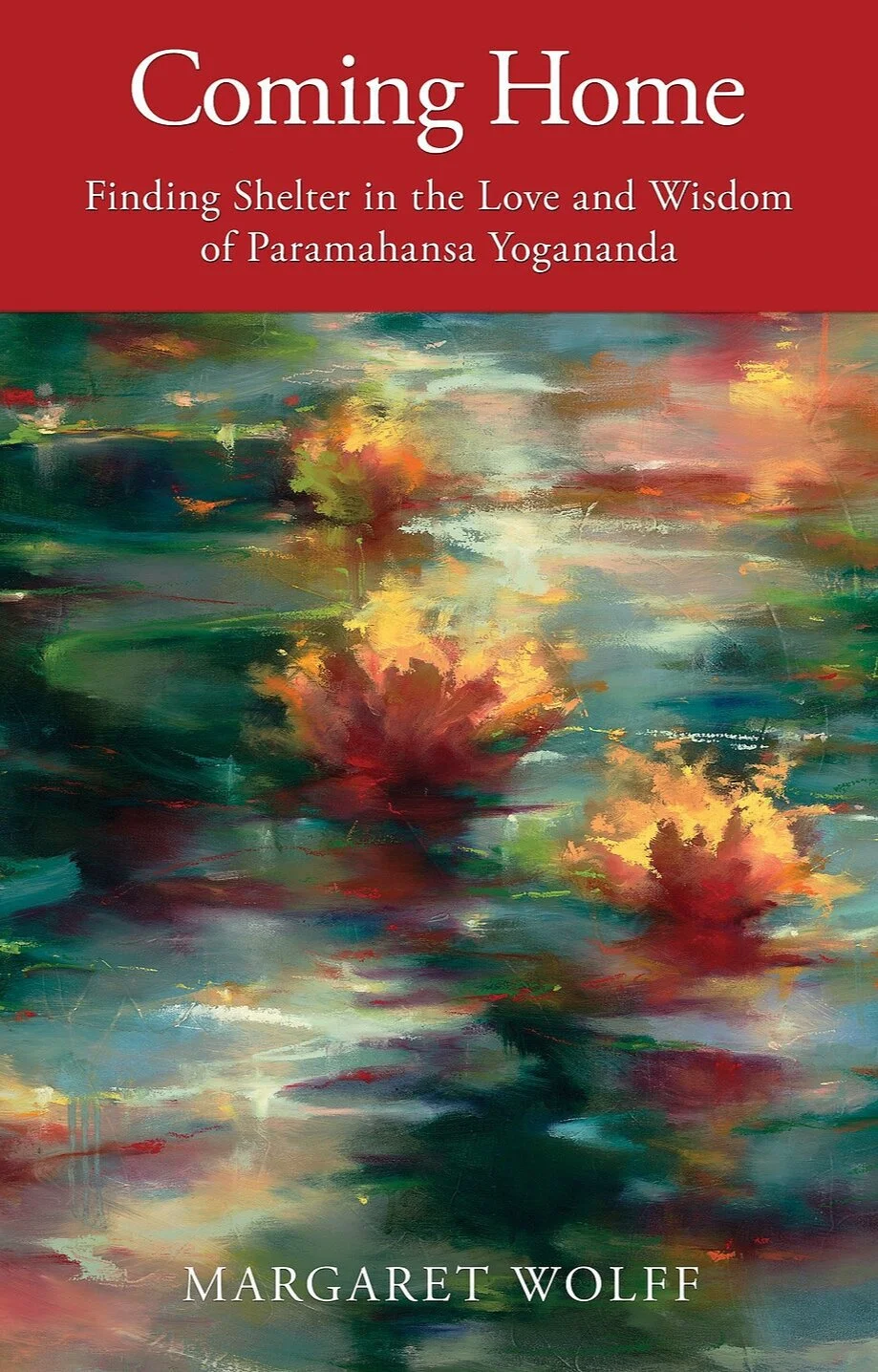
The following information is Thomas’ as-told-to story of his early life and his coming to Paramahansa Yogananda, excerpted from the book
COMING HOME: Finding Shelter in the Love and Wisdom of Paramahansa Yogananda with the author’s permission.
Chapter Thirteen
Thou and I Never Apart
I’m a Jungian analyst. I’ve spent my life working with the inner world. It’s been the primary domain of my life. Even before I became an analyst, even as a child, what was happening inside me was of far greater interest to me than what was going on in the world.
I was born in Huntington Park, California, just south of L.A. I am, as of this day, ninety-two years old. I’m married. My wife left the body almost ten years ago, but we are still married in Spirit; our marriage did not end because she is no longer in form.
I had seven children, five biological children and two children born to my wife. I adopted them when we married, and they have been with me most of their lives.
I was the fifth of six children. We were a close family. My father was a high school teacher. He taught shop classes. My mother stayed home with the children. I was baptized in the Presbyterian Church and went to church every Sunday with my family. It was an important part of our life, but the Presbyterian idea that you did not experience real happiness until you died and went to heaven made no sense to me. It seemed far-fetched. If this were true, I thought, then what was life here on Earth all about?
Two events from my childhood shaped my life. When I was seven years old, my grandmother died. Though I’m certain she was only trying to help me feel better about my grandmother’s death, my mother told me that if you are a good person here on Earth, you go to heaven forever when you die. I was only seven, already quite bored with the world, so the thought of going any place “forever” scared the hell out of me.
The second event happened four years later when I was eleven. I had a brother who was three years older than I am, whom I loved very much. He was an integral part of my life. He had been very sick all his life, then he got well, then he got a cold, then pneumonia, then he died quite un- expectedly. His death was an enormous loss for me.
He was a special boy. He had visions and lived in two worlds—in this one here with us and in the astral world with friends. I’d always had the feeling there was more going on here on Earth than met the eye, and my brother’s visions—just being in his presence—proved to me that what I believed about life on Earth was true. Losing him took away that context, and I completely fell apart. I repressed all my desires to know more about that unseen reality and lived on the surface of things. I somehow managed to get through school, but those years were oblivion to me.
By the time I got to college I was an agnostic and an atheist. I thought spirituality was “silly stuff.” I took a couple of classes in religion that were interesting, but they didn’t settle anything for me. They just raised more questions in my mind. The whole reason I got a doctorate in psychology was so I could understand what this world was all about. When I did my oral exam before my doctoral committee— some of the finest psychologists I ever knew—I realized they didn’t have a clue about the purpose of life any more than I did! And if they didn’t know what this world was all about, what would happen to me? With that thought, a cold wave of fear went through me.
My spiritual life began to emerge after I got my Ph.D. and began my own Jungian analysis. I spent a good ten years deeply examining my inner life and I got a lot of things worked out, but something was still missing. I didn’t know what that was, but I knew I had to find it.
When I started doing therapy with others, I—out of necessity—dug even deeper into myself, into my own thoughts and feelings. I began to understand that the answers to my questions about life were inside me, not out there in the world. This was an enormous realization that changed my life! It allowed me to acknowledge and value my own thoughts and experiences, and to see, as Master says in the Autobiography, “... a divine universal plan exists and it is beautiful and full of joy.”
Soon after I had this realization I heard an inter- view the BBC did with Carl Jung. At one point during the broadcast, the interviewer said, “Well, now, Dr. Jung, do you believe in God?” Jung kind of sputtered, then he stuttered, then he hesitated. Finally he said, “I don’t believe in God, I know God!” That did it for me! I didn’t know Jung personally, but I knew enough about him to know he had used his powerful mind to understand what God is. He knew God, and he knew he knew God! Listening to him, I suddenly understood it was God I was looking for! I began to read Vivekananda. I worked with my dreams. My inner life became very real and I could see meaning in events that I’d never seen before. It was tremendous!
My professional life was booming by then. I had a very successful practice, but my marriage of fifteen years was in shambles and coming to an end. Sometimes, no matter how hard you try, things don’t work out. This was the case for me. It was very painful.
I was drawing and painting a lot then to try and sort out my feelings, and I decided to take an art class to help me figure out what to do about my marriage. On the first day of class, I walked into the art studio and noticed a woman painting quietly in the back of the room. I didn’t know who she was. I looked over to where she was working and she looked up at me. Our eyes locked for a moment and I thought, Oh dear! This is big trouble! There was no question in my mind she had to be an intimate part of my life. I knew it—just like that. I was so stunned
I couldn’t catch my breath. It was terrible and beautiful at the same time!
Over the next few months I got to know her a little bit. One day she gave me a copy of Autobiography of a Yogi and said, “You might want to read this.” She’d been on the path ten years by then; Master was her life. I read the book—actually, I read half of it and stopped reading, not because I didn’t need to read more, but because I was so full of Master’s truth I couldn’t take any more in! I eventually finished the book some months later, and over the years I’ve read it many times.
I started reading the SRF Lessons and began to meditate a little bit. I got the techniques and started practicing them. I’d been aware of Spirit and God before, and I had long wanted to live in a spiritual way, but you can’t do what you don’t know how to do! Now—as a result of doing Master’s techniques—doors opened inside me! I could calm myself to the point where I was able to think about God and actually perceive Spirit, and I began to pay attention to who I was as a soul. Everything I did—even the ordinary things I’d always done—had so much meaning to me. This wasn’t a permanent state of consciousness, but rather something I moved in and out of. I knew Spirit was there, but It was not always available to me, and I missed It when It was gone. This was amazing to me, almost unbelievable. It wasn’t that I felt I didn’t deserve God, but more that I hadn’t done anything I could understand to experience God. It was as if God slipped in when I wasn’t watching!
One day, maybe about a year into my practice, I went for a walk in the woods by myself and realized that all my doubts about the meaning of life, all my wondering whether I’d ever know the purpose of it all, had vanished! What life on Earth was all about, why I was here—to find God—finally was clear to me! Master was my guru! He would guide me! I was no longer alone! I was stunned! I still didn’t like everything I had to do here, but I understood everything had a purpose—even the things I had to experience in my life I didn’t like.
Within the year, I was divorced. I hated to go through it, but it was clear there was no other choice. About a year later, in 1967, I married the dear woman who brought me to Master in San Francisco. We took Kriya together from Brother Anandamoy in the afternoon, and after the service, he set up a little table before the Kriya altar and married us.
We were together fifty-five years. She continues to play a big role in my life though, as I said, she is no longer in the body. Three or four years after she died someone asked me if I was going to get remarried. I was shocked by the question because it never occurred to me I wasn’t still married. She was, is, and will forever be my wife.
She was not a perfect mate, nor was I, but she always took me to God. She was very intuitive and knew things long before I did, long before they happened. She had an awareness—and gifts—I didn’t have, a conscious perception of the angels Master says are waiting for us to give them the opportunity to help us on our journey. She taught me there is more to life than I can see or know in the present moment. One day she said, “I know why you love me. It’s because I have my hand in God’s.” It was the truth. Living with her made the path real for me.
My spiritual life began when I read the Autobiography and it is still, after all these years, a go-to book for me. When I start reading it now, it’s hard to stop. So many answers! So much inspiration! It’s like it’s alive. Sometimes, I’ll read a sentence or two and think I could spend my whole life on just those few words. I have an original copy of the Autobiography that Master signed. I hold it and think, “Master held this in his hands!” It’s thrilling.
Master is and always has been the central focus of my life, but when I experience Master, when I read the Autobiography, something of my wife is always there. She brought me to him not just that day in the art studio, but throughout our marriage, even in her death. Master in her is what I love most about her.
Copyright Margaret Wolff, 2020
The material is protected under copyright law and cannot be reproduced without permission. Please contact Margaret@ComingHomeStories.com for further inquiries.